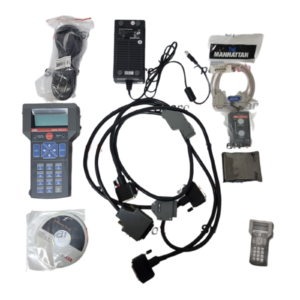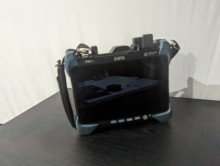
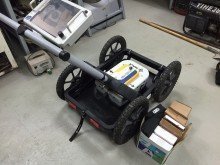
MALA X3M Ground Penetrating Radar Control Unit
The MALA X3M is the integrated radar control unit for the RAMAC/GPR system from MALA (now part of Guideline Geo). It mounts directly on a shielded antenna and sends data straight to a laptop giving a lighter simpler setup than earlier systems that needed a separate control unit and fiber optic cables. It is used to image the subsurface for utility locating, concrete scanning, archaeology, geotechnical investigation, and civil engineering.
Key Features
- Integrated control unit: mounts directly on the antenna and is powered externally which keeps the system compact
- Compatible with RAMAC/GPR shielded antennas: works with the 100, 250, 500, and 800 MHz antennas so one control unit can serve different depths and resolutions
- No fiber-optic cables: communicates directly with the laptop which simplifies setup and reduces points of failure
- Ground Vision acquisition software: fully compatible with the Windows based Ground Vision software
- Autostacking by default: averages successive traces automatically for cleaner data
- Simple start-up and shutdown: indicator light shows when the unit is ready with automatic power off
- RAMAC/GPR cart compatible: can be mounted on the cart and pulled with a handle for comfortable surveying across larger areas
- Modular and flexible: part of the modular RAMAC system so antennas and accessories can be swapped to suit the job
- Regulatory safeguard: designed to meet FCC Part 15 rules in the US which require a manually operated switch on a GPR system
- Companion product: the EasyLocator is a related unit that uses its own acquisition software EasyVision
Typical Applications
- Utility locating, including pipes, cables, and ducts
- Concrete scanning for rebar, conduits, and voids
- Archaeological and forensic surveys
- Road, bridge, and pavement thickness and condition assessment
- Geotechnical and environmental investigations
- Void and sinkhole detection
Why Choose It
The Mala X3M gives GPR operators a compact cable light control unit that works across a family of shielded antennas. Fewer connections and direct laptop communication mean faster setup so more time is spent collecting data.