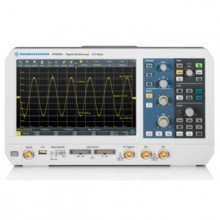
Rohde Schwarz RTB2K-302M Mixed Signal Oscilloscope 300 MHz 2+16 Channels
The Rohde Schwarz RTB2K-302M is the two channel 300 MHz mixed-signal version of the RTB2000 oscilloscope series. It is an RTB2002 with the 300 MHz bandwidth upgrade and the RTB-B1 mixed-signal option so it combines two analog channels with 16 digital channels in one bench instrument. It adds a 10 bit ADC a 10.1 inch touchscreen and integrated tools such as a logic analyzer, protocol analyzer, and digital voltmeter which makes it a capable scope for embedded design, teaching labs, and production test.
Key Features Rohde Schwarz RTB2K-302M
- 300 MHz bandwidth, 2 analog channels: a rise time under 5 ns (the 2 channel scope rise time as listed by distributors) 1 MΩ inputs, and 1 mV/div to 5 V/div sensitivity
- 16 digital channels (MSO): with 10 Msample memory per channel a 1.25 Gsample/s sampling rate and a 300 MHz digital bandwidth plus up to two parallel buses
- 10-bit A/D converter: R&S says this gives four times the vertical resolution of a conventional 8 bit scope
- Fast sampling and deep memory: 1.25 GSa/s per channel (2.5 GSa/s interleaved) and 10 Mpts per channel as standard or 20 Mpts interleaved
- 10.1-inch capacitive touchscreen: a 1280 × 800 pixel display with SmartGrid layout
- Fast waveform update rate: up to 50,000 waveforms per second
- Integrated instruments: logic analyzer, protocol analyzer waveform and pattern generator (up to 50 Mbit/s with the option) and a digital voltmeter
- Serial bus decode (with options): I²C, SPI, UART/RS-232/RS-422/RS-485, CAN, and LIN
- History and segmented memory option: for long observation periods
- Interfaces: USB and Ethernet
- Compact bench size: around 390 × 220 × 152 mm and about 2.5 kg
Typical Applications
- Embedded systems design and debugging
- Mixed signal analysis with analog and logic together
- Serial bus analysis
- Teaching and university labs
- Production test and service work
Why Choose It
The Rohde Schwarz RTB2K-302M gives you 300 MHz of bandwidth and 16 logic channels in a two channel bench scope so you can follow signals from the analog front end through to the digital bus on one screen.